|
|
|
| Partner number: | P3 |
| Organisation name and acronym: | Technical University of Košice (TUKE) |
| Aims and activities of the organisation: | |
| Technical University of Košice for more than 55 years of its existence not only deeply entrenched in the life of the city of Košice and Eastern Slovakia, but has become one of the pillars of Slovak science and higher education, with an excellent international reputation. Its mandate provides innovative research project-linked with the European Research Area and an excellent education in all the spheres of individual faculties of the university. One of the strategic goals of the university is concentrating and streamlining research and development (R & D) in renewable energy at the Technical University of Košice (TUKE), which led to the solution of many projects aimed at efficient use and management of renewable resources. One of the researchers who took part in achieving mentioned strategic objective is Dr.h.c. prof. Ing. Michal Kolcun, PhD. who was responsible for the activity of “Intelligent control production and consumption of electricity from renewable energy sources” of the project from the European Structural Funds “Research centre for efficient integration of the renewable energy sources”. During realization of this activity there was created the new Laboratory of renewable energy sources with the possibility of control and visualization at the Department of electrical power engineering. Thus there was formed an individual electrical island system of renewable resources, with the accumulation of energy, distribution lines and loads where one can test the various situations that may arise in the system. | |
| The the role of TUKE/P3 in the project: | TUKE will be lead partner of WP3 and participate in the following activities: WP1: development of questionnaire for self-assessment of RU and VN universities, situation analysis at P6, P7 and P8; assessment visits; selection and assignment of courses; WP2: validation of equipment lists for P6, P7 and P8; WP3: development and delivery of Webinar/Training in advanced teaching techniques, organization of training in curriculum development for 6 RU and/or VN staff; WP4: hosting student summer school; WP5: peer-review of 4 courses, analysis of curriculum pilot implementation for P6, P7 and P8; quality assurance visits; WP6: update of related information on TUKE web-site, participation in dissemination conference; signing agreements; WP7: assignment of project team, financial and progress reporting, day-to-day coordination, participation in coordination meetings. |
| Operational capacity: Skills and expertise of key staff involved in the project: | |
| Name of staff member: | Summary of relevant skills and experience, including where relevant a list of recent publications related to the domain of the project. |
Dr.h.c. prof. Ing. Michal KOLCUN, PhD.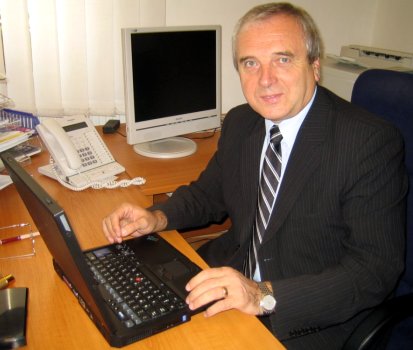
| Head of the Department of Electrical Power Engineering (EPE) at FEI TU of Košice. He deals with the management of EPS operation, using IT in the field of EPS and addressing technical problems in connection with the liberalisation of the electricity market. He has been responsible researcher and principal investigator of various projects (VEGA, APVV, VaV). His experience in managing of various research grant projects (KEGA, VEGA, APVV, and other) guarantees a successful process and completion of the project. He is author of more than 350 articles in various journals and conferences. List of CC publication: KURIMSKÝ, Juraj - DOLNÍK, Bystrík - KOLCUN, Michal: Unipolar characteristics of ZnO ceramics. In: Journal of Electrostatics. Roč. 71, č. 3 (2013), s. 418-421. - ISSN 0304-3886. (IF=0.567) MARTON, Karol - KAPÁS, Peter - CIMBALA, Roman - KOLCUN, Michal: The contribution of space charge in a high non-homogenous electric field to the creation of negative differential conductivity. In: Journal of Electrostatics. Vol. 71, no. 3 (2013), p. 276-280. - ISSN 0304-3886. (IF=0.567) PADLYAK, B. V. - ADAMIV, V. T. - BURAK, Ya. V. - KOLCUN, Michal: Optical harmonic transformations in borate glasses with Li2B4O7, LiKB4O7, CaB4O7, and LiCaBO3 compositions. In: Physica B : Condensed Matter. Vol. 412 (2013), p. 79-82. - ISSN 0921-4526. (IF=0.568) KURIMSKÝ, Juraj - DOLNÍK, Bystrík - MARTON, Karol - KOLCUN, Michal - TOMČO, Ladislav - RAJŇÁK, Michal - TIMKO, Milan - KOPČANSKÝ, Peter: The Investigation on the E-J Characteristics and the Role of Nanoparticle Concentration in Weakly Polar Magnetic Fluids. In: Acta Physica Polonica A. Vol. 126, no. 1 (2014), p. 246-247. - ISSN 0587-4246. (IF=0.28) DOLNÍK, Bystrík - KURIMSKÝ, Juraj - MARTON, Karol - KOLCUN, Michal - TOMČO, Ladislav - BRIANČIN, J. - FABIÁN, M. - HALAMA, Maroš - VOJTKO, Marek - RAJŇÁK, M.: Hall Effect in ZnO Extrinsic Structure. In: Acta Physica Polonica A. Vol. 126, no. 1 (2014), p. 76-77. - ISSN 1898-794X. (IF=0.28) MÁSLO, Karel - KOLCUN, Michal: Load–frequency control management in island operation. In: Electric Power Systems Research. Vol. 114 (2014), p. 10-20. - ISSN 0378-7796. (IF=1.448) YANCHUK, O. M. - TSURKOVA, L. V. - MARCHUK, O.V. - URUBKOV, I. V. - KOLCUN, Michal - RUSEK, Karolina Maria - EL NAGGAR, A. M. - ALBASSAM, A. A.: Second-order non-linear optical effects in ZnS nanocrystallites incorporated into different polymer matrices. In: Materials Letters. Vol. 169 (2016), p. 131-134. - ISSN 0167-577X. (IF=0.807, 2015) RUSEK, Karolina Maria - EL-NAGGAR, A. M. - ALBASSAM, A - LAKSHMINARAYANA, G. - KOLCUN, Michal - CHMIEL, M. - MYRONCHUK, G.: Laser induced birefringence in La–Ga–S–O–Gd glass polymer nanocomposites. In: Journal of Materials Science: Materials in Electronics. Vol. 27, no. 7 (2016), p. 6745-6749. - ISSN 0957-4522. (IF=0.553, 2015) LAKSHMINARAYANA, G. - RUSEK, Karolina Maria - EL-NAGGAR, A.M. - ALBASSAM, A.A. - KOLCUN, Michal - MYRONCHUK, G.: Influence of the nanoparticle sizes on the photo-induced absorption of La-Ga-S-O-Dy glass nanocomposites. In: Physica E: Low-Dimensional Systems and Nanostructures. Vol. 81 (2016), p. 290-293. – ISSN 1386-9477. (IF=0.636, 2015) |
prof. Ing. Iraida KOLCUNOVÁ, PhD.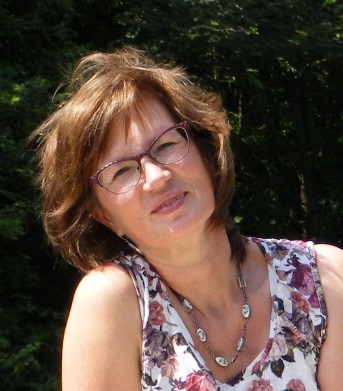
| Professor at Department of Electrical Power Engineering (EPE) at FEI TU Košice. In her research and pedagogical activity deals with the issue of physical phenomena taking place in the electrical insulating gas, liquid and solid materials during the electrical and thermal stresses, with degradation of solid dielectrics under the action of partial discharges, with diagnostics of insulating systems of high voltage electricity facilities by partial discharge method, with identifying methods for measuring EMF in the vicinity of overhead lines. She is author of more than 240 articles in various journals and conferences. |
Ing. Dušan MEDVEĎ, PhD.
| Assistant professor at Department of Electrical Power Engineering (EPE) at FEI TU Košice. In his professional and scientific activity he works in the field of computer modelling of temperature and electromagnetic fields by numerical methods and computer modelling of the elements of the power system. Within the project there will be used his experience in the field of computer modelling and knowledge of solution of fault conditions in the EPS. He is author of more than 160 articles in various journals and conferences. |
Ing. Tatiana VARADYOVÁ, PhD.
| Assistant professor at Department of Engineering Education at Technical University Košice Author /co-author of 37 publications (teaching materials, articles, conference proceedings, books). |
Ing. Zsolt ČONKA, PhD.
| Assistant professor at Department of Electrical Power Engineering (EPE) at FEI TU Košice. Electrotechnician to manage activity or operation equipment, including lightning conductors in non-explosive buildings according to Decree 508/2009, §23 Author / co-author of 43 publications (magazines, journals, books). Member of Slovak Electrotechnical Society. |
| Work package type and ref.nr. | Development, WP3 |
| Title | Training |
| Related assumptions and risks | It is recognized that all staff involved has enough expertise in the areas of the project. It is assumed that involved staff is motivated. It is crucial that the project staff is flexible and prepared for major changes in content and methodology of educational programmes. It is assumed that European partners have strong expertise in the areas of the project and are ready to share it. |
| Description | Since one of the aims of the project is the development of academic mobility of students and staff between all project partners, it is recognized that professional skills harmonisation and enhancement is important for all consortium members. Training is performed in curriculum development, course content and teaching methodology in line with EU qualification frameworks. In order to provide course developers, future instructors of modernised courses as well as other teaching staff of partner universities and other HEIs in partner countries with knowledge of advanced teaching techniques, taking into account the differences between educational processes at Russian, Vietnamese and European universities (D1.2.) webinars will be held by P3 at each Russian and Vietnamese partner university in M6 before the development of courses starts (A3.1.1). After course developers at RU and VN partners are defined, in M7 each EU partner will carry out a 10-days intensive training session for 3-4 course developers and master programme supervisors from RU and VN universities with special emphasis on curriculum development (A3.2.1), i.e. course objectives/learning outcomes, workload in ECTS credits, course coherence, methods of assessment and performance, bibliography, materials and facilities needed etc. Training will result inter alia in the production of draft syllabi. Course developers will furthermore enhance their professional expertise in subject areas (work in the library, professional meetings etc). Finally, the trainees will get additional skills in teaching methodology through visiting lectures and practical classes, study of existing course materials. Selection of host universities will be based on EU partners’ expertise in related areas. After teaching materials are ready, before the pilot implementation (A4.2.1.) a series of webinars will be organized by course developers for future instructors of the course at Russian and Vietnamese universities in M19 to ensure the course content is harmonised (A3.2.2). |
| Tasks: | A3.1.1. Webinar in advanced teaching techniques A3.2.1. Training in curriculum development and course content A3.2.2. Series of webinars on course harmonisation |
| Expected Deliverable/Results/Outcomes | 3.1 Skills improved in teaching methodology 3.2 Skills improved in curriculum development and course content |